
Should You Wallpaper Your Ceiling?
Lie down on your bed and look up. Would you like a quiet wash of color above you? A trail of leaves your eye can follow while your thoughts wander? Or a whole painted world to get lost in before you turn out the light? That is the first decision to make about ceiling wallpaper. Choosing the design comes next.
Start with the view from your pillow
Look at the ceiling twice: once in daylight and once with just your bedside lamp on. Notice where your eyes naturally land. A ceiling fan might sit right where you imagined the center of a mural. A sloped ceiling might put a favorite detail beautifully in view. If you share the room, ask the other person what they would enjoy seeing there, too.
- If you want calm: Start with a leafy repeat in two closely related shades, such as soft sage on a pale green ground. Keep the walls quiet. If you find yourself tracing every leaf when you would rather let your eyes rest, try a softer contrast or keep the ceiling painted.
- If you want to daydream: Look for lines that take you somewhere: a curling fern, a winding branch, or birds moving across an open sky. Notice whether you enjoy following the path from the bed as much as you do from the doorway.
- If you want a story: Think of the pleasure of looking up at a painted ceiling in the Sistine Chapel. Your own version might be a woodland canopy, drifting clouds, or a storybook scene. A mural gives you a composition to explore; repeating wallpaper lets your eye enter the pattern almost anywhere. For a mural, decide which way the scene should face before you order.
Let the person who sleeps there choose the mood
Age can change the question you ask. In a nursery, consider the view from the crib as well as from the chair where you spend long evenings. For a child old enough to choose, try asking, “Would you rather spot something new each night or look up at something peaceful?” A teenager might want the ceiling to feel like the most personal part of the room. Taste matters more than a rule about what belongs in a boy’s or girl’s bedroom. Start with the person’s own colors, interests, and sense of adventure.
Decide whether the walls should join in
For a ceiling that draws the eye as soon as you enter, try painted walls with a color borrowed from the print. For a room that feels wrapped in pattern, carry one wallpaper from wall to ceiling. If you love mixing prints, start with a color the two share, then give your eye something different to enjoy on each surface.
One bedroom, four ways to use wallpaper
Where you place wallpaper changes what you notice from your pillow. Compare these four versions of the same bedroom: pattern overhead, pattern around the bed, one design on both surfaces, and two different designs together.
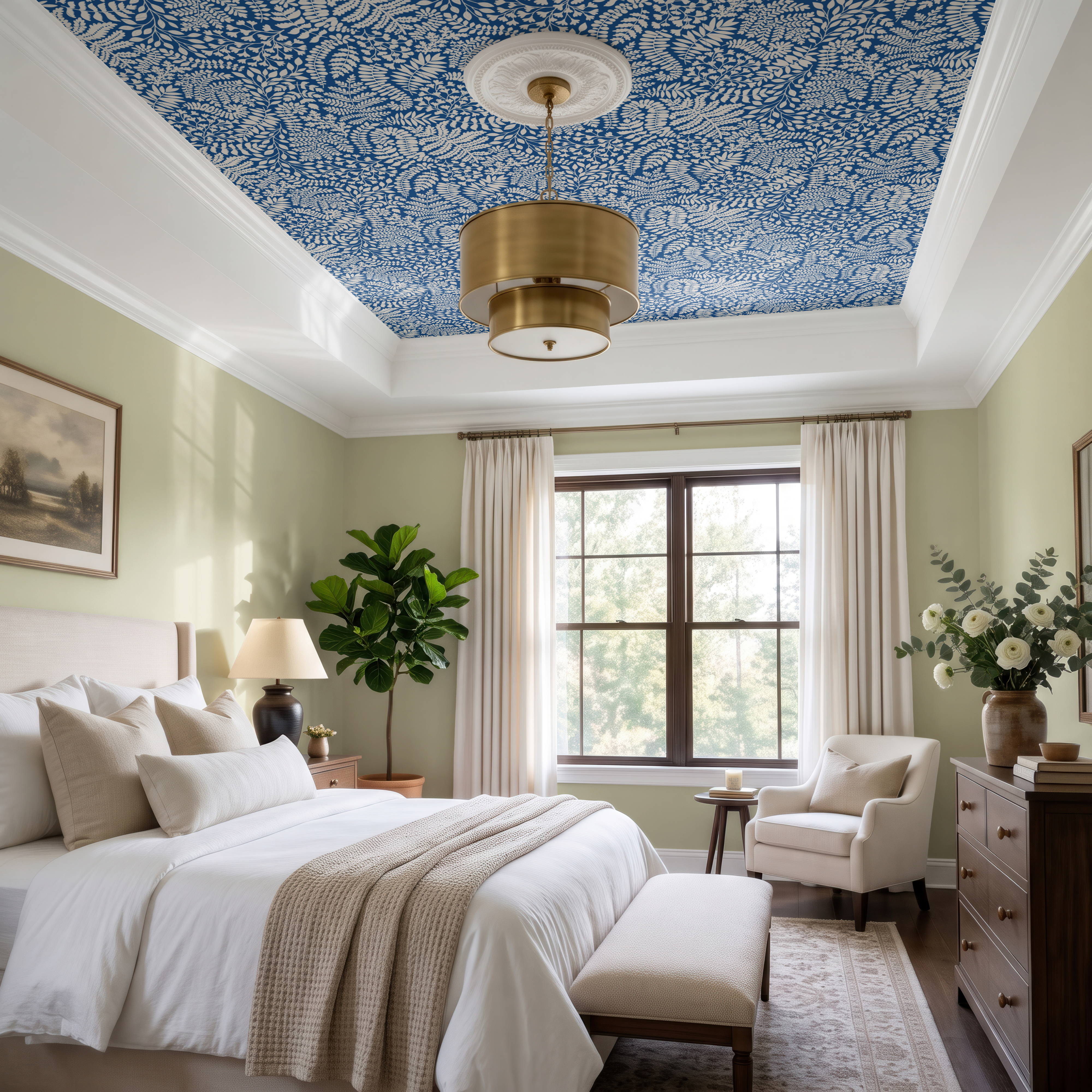
1. Wallpaper on the ceiling only
Understory Ink Blue gives you a canopy of ivory leaves to follow from your pillow. Soft Celery painted walls let the ceiling become the focal point.
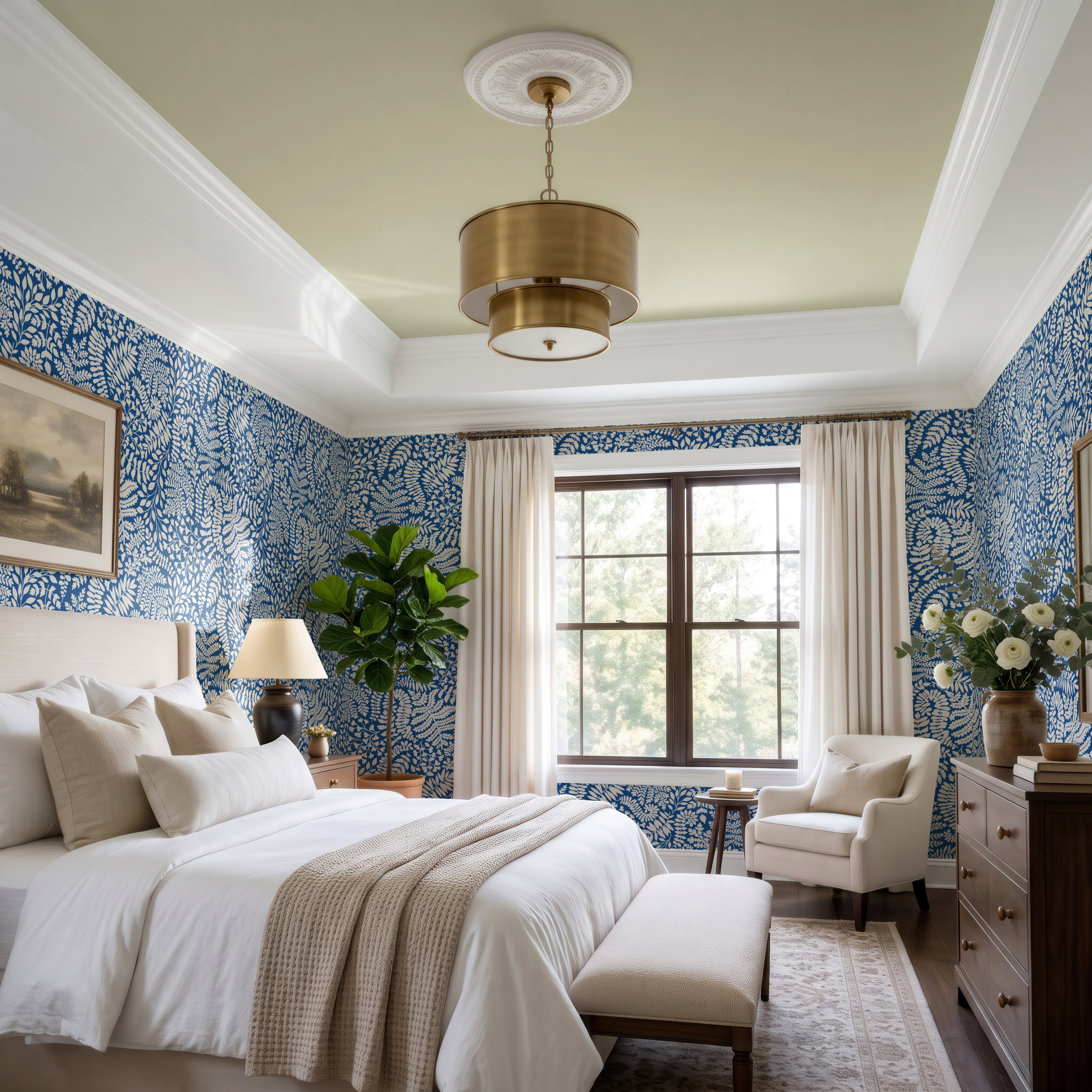
2. Wallpaper on the walls only
Understory Ink Blue surrounds the bed, while the Celery painted ceiling offers a quiet stretch of color overhead. White molding frames the transition.
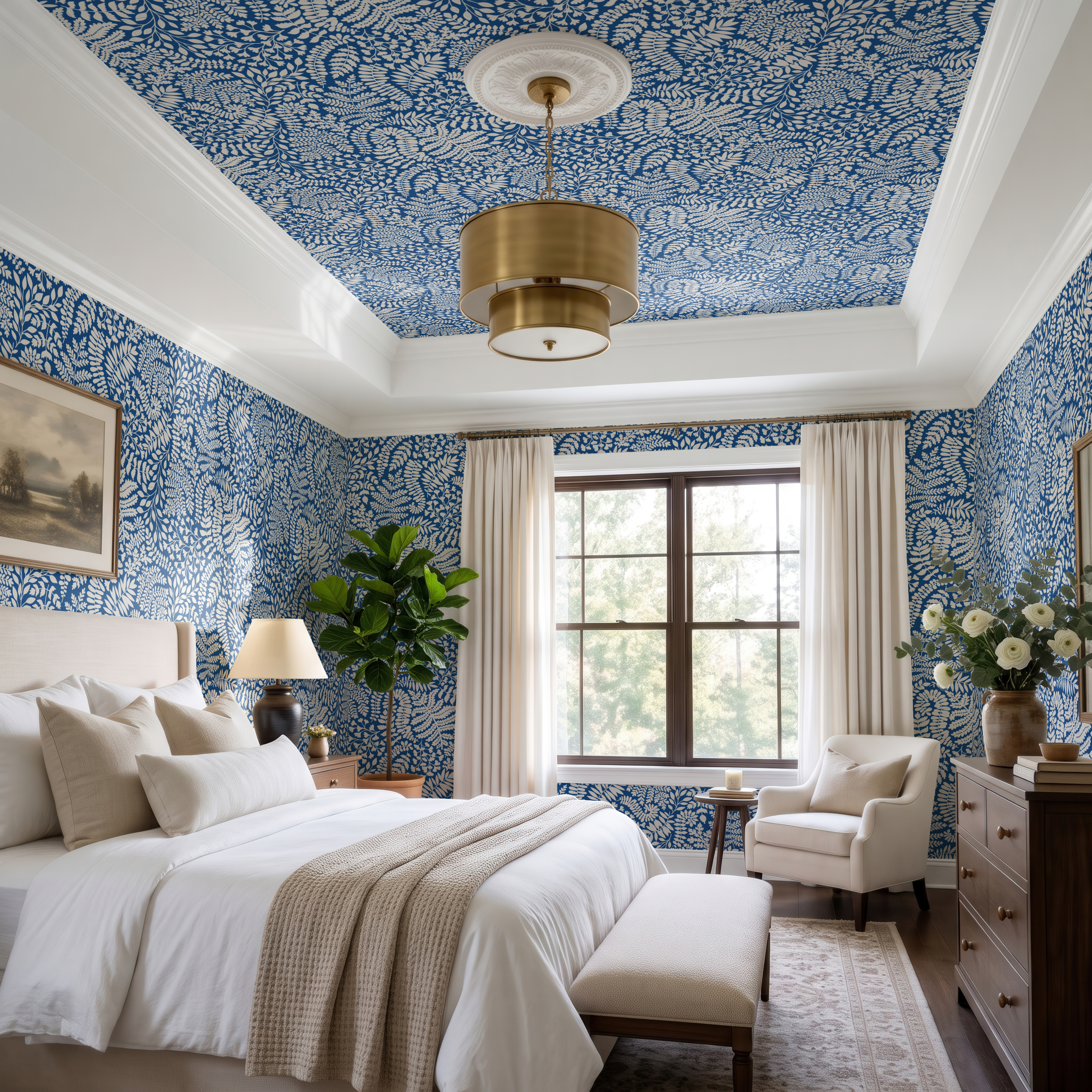
3. The same wallpaper on walls and ceiling
Repeating Understory Ink Blue across both surfaces creates an enveloping botanical room. The broad white molding and simple ivory bedding give your eye places to pause.
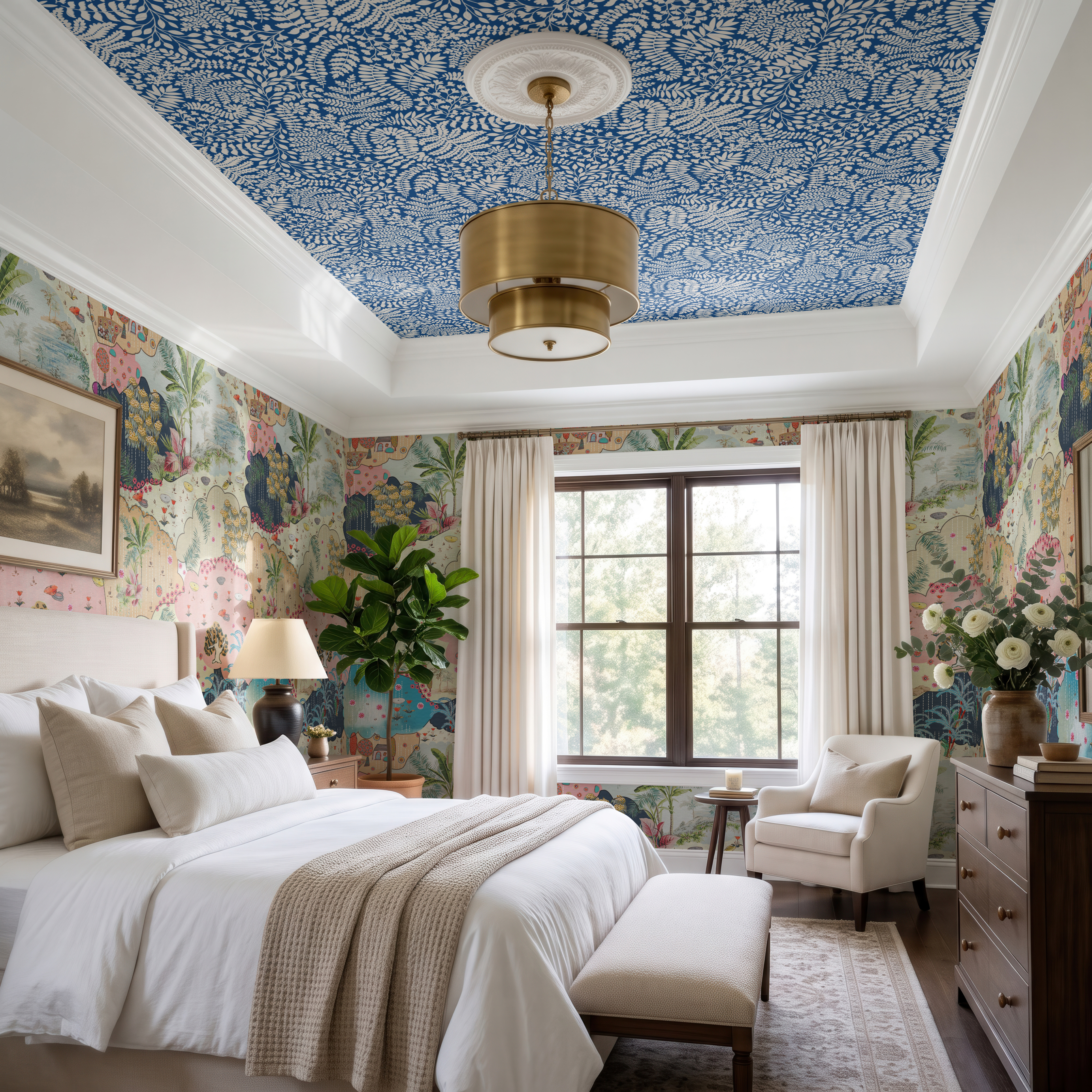
4. Different wallpapers on walls and ceiling
A softly drawn woodland landscape surrounds the bed, while Understory Ink Blue adds a denser botanical pattern overhead. The neutral walls let the blue ceiling stand out, with nature connecting the two designs.
Now consider the same four approaches in a hallway or entryway. Here, you experience the patterns as you arrive and move through the space, rather than while resting in bed.
One hallway, four ways to use wallpaper
Look at the room before you read the captions. Where does your eye go first? Compare the first two views to see what changes when the ceiling or the walls are left plain. Then compare one continuous pattern with two different designs.
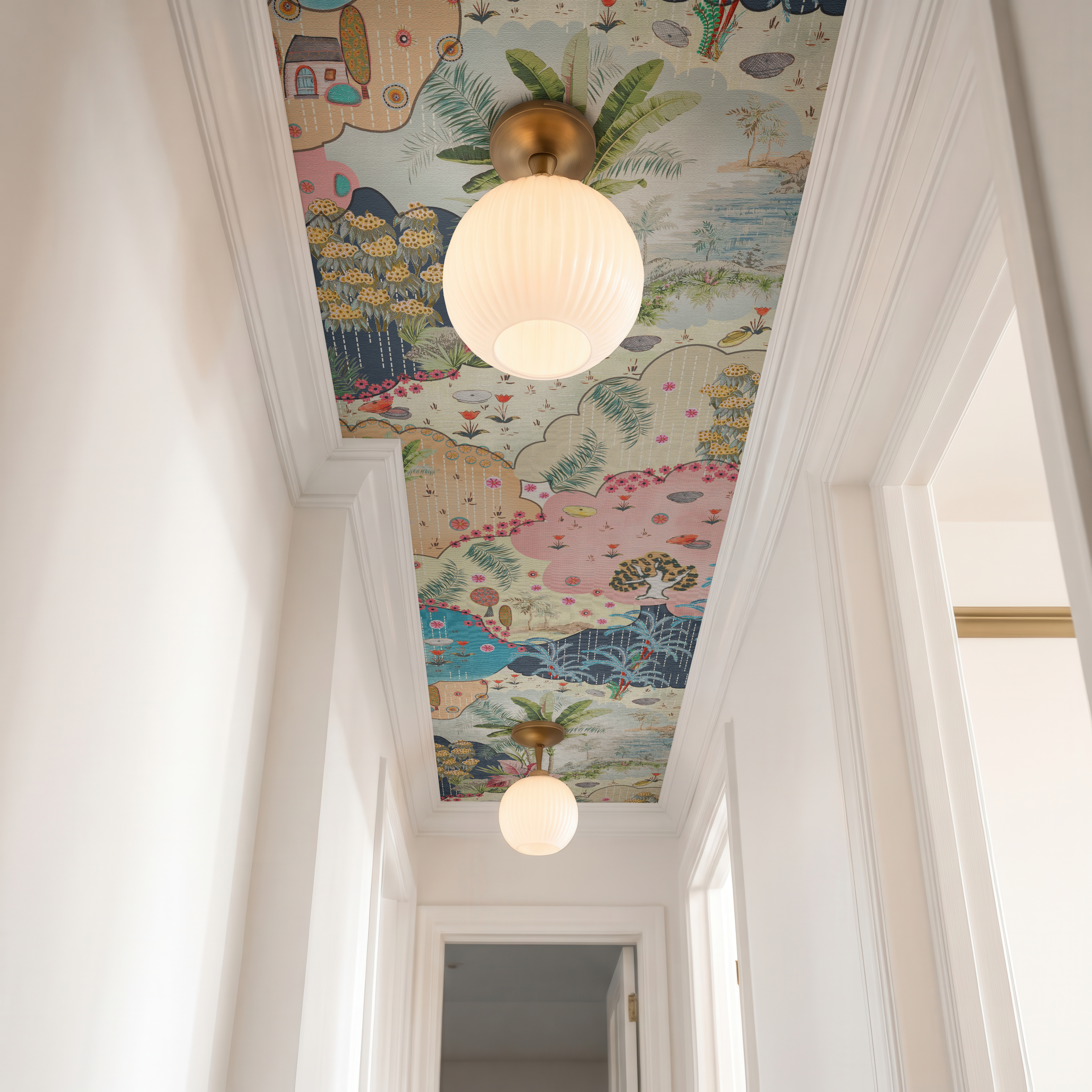
Against plain walls, the ivory ferns draw your eye up as soon as you enter.
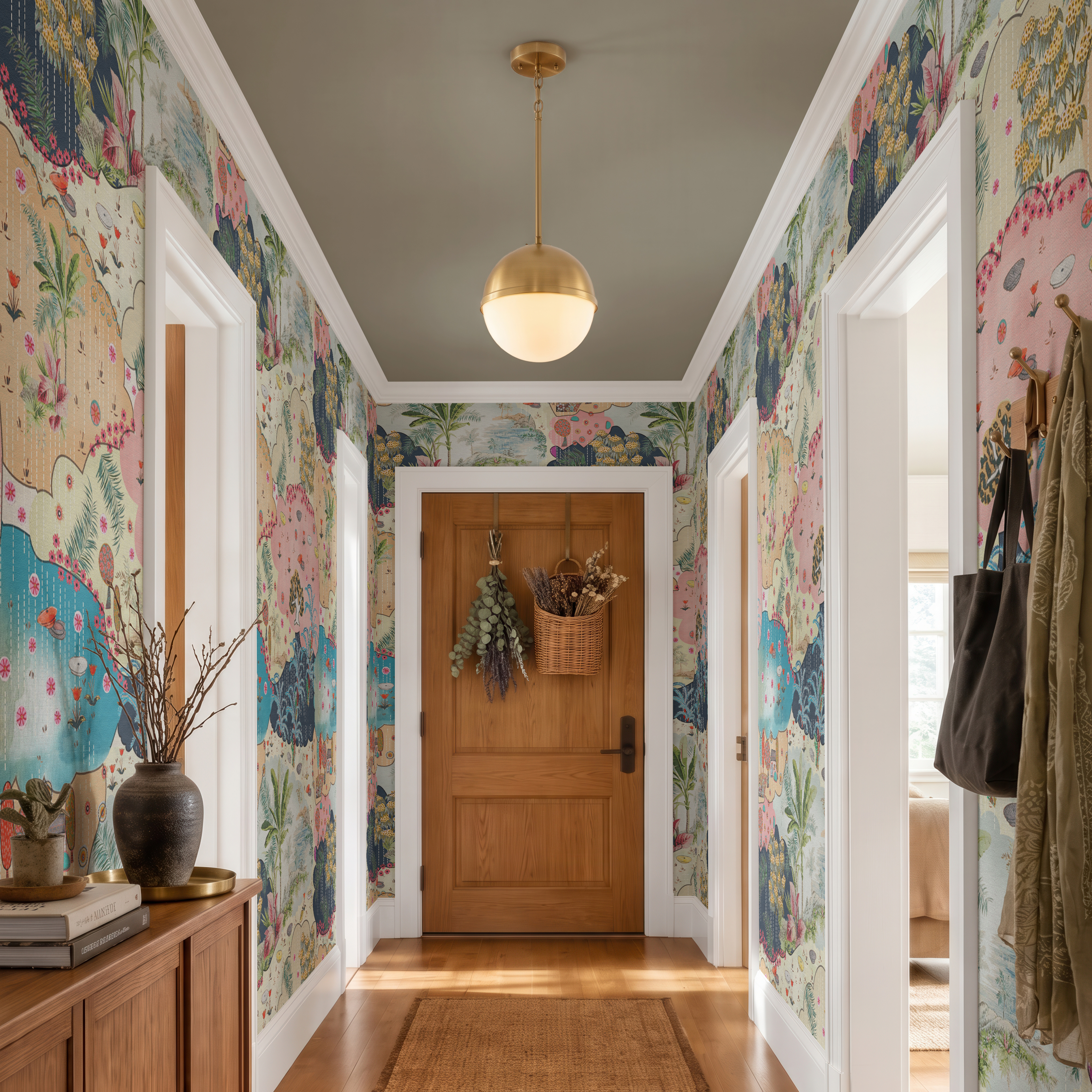
The landscape unfolds at eye level. The plain ceiling gives your eye a quiet place to rest.
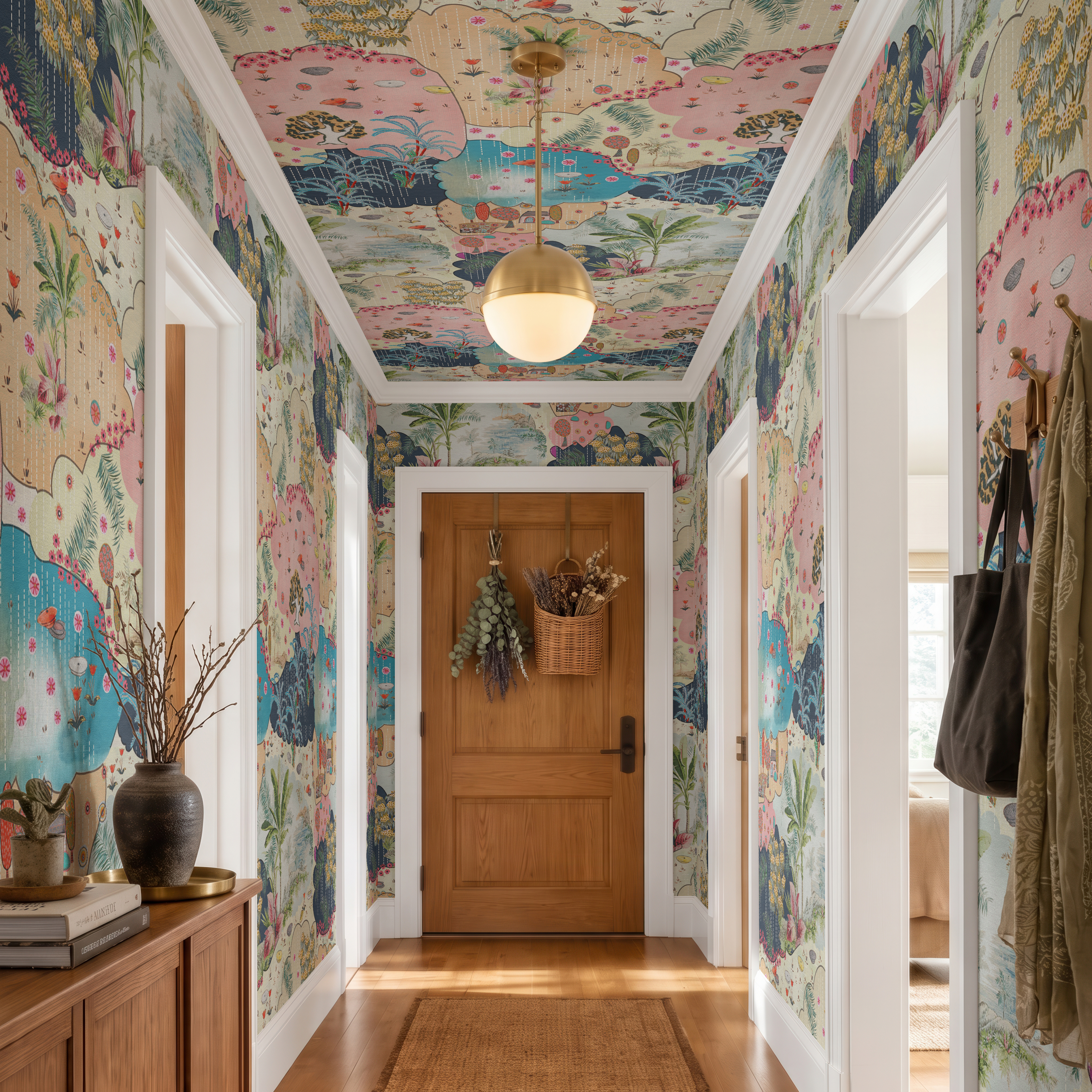
The same fern motif wraps around the room. Compare this with the first view: how much of the pattern would you enjoy seeing at once?
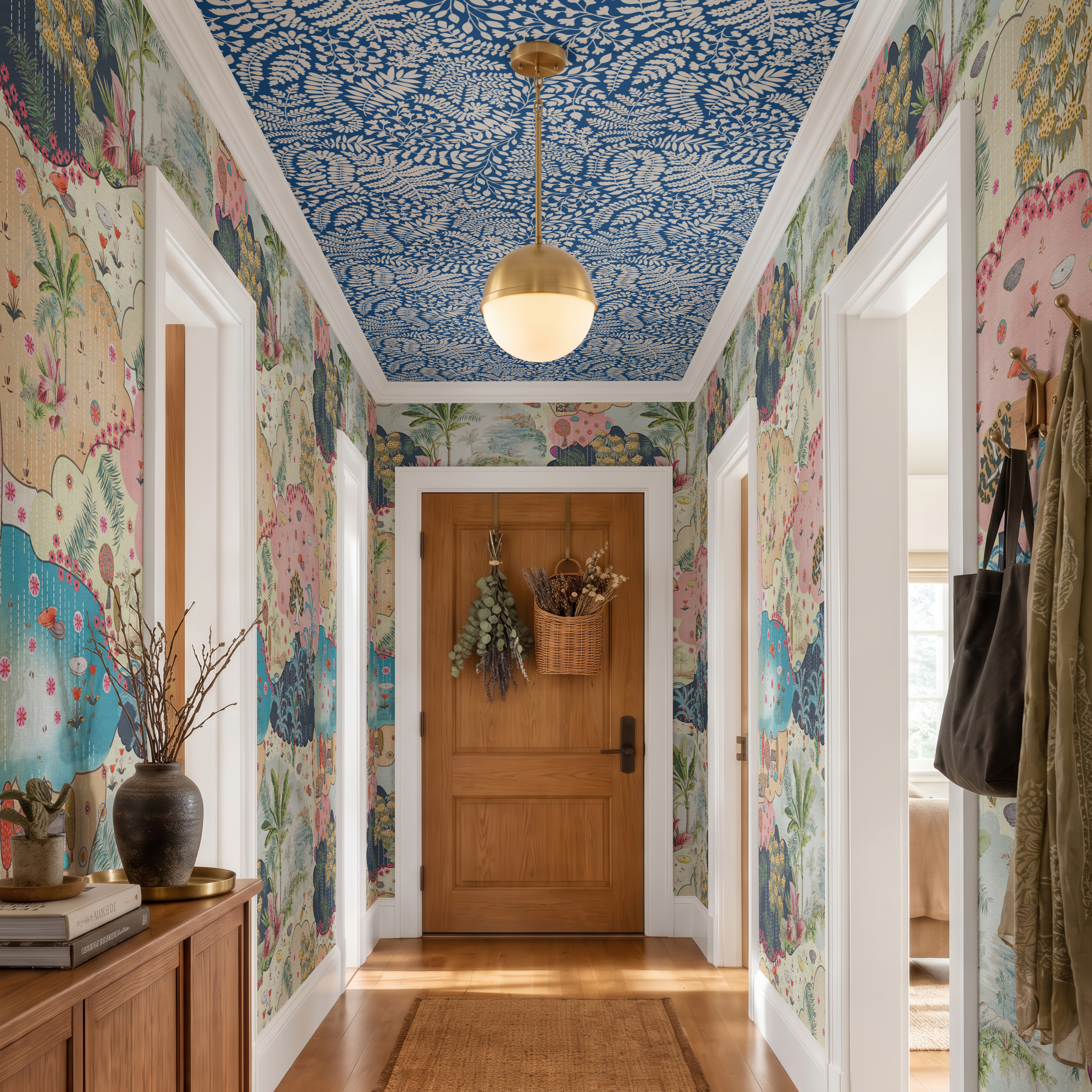
The blue links the scenic walls to the fern ceiling, while the crown molding frames each pattern.
In our hallway mockup, 0613 Paloma is on the walls and Understory Ink Blue is on the ceiling. The blue overhead picks up a color in Paloma’s landscape. The walls have little scenes to discover; the ceiling repeats ivory fern silhouettes. White crown molding gives each design a clear edge. Our upcoming Pattern Pair blog series will show more combinations this way: one room, two wallpapers, and the reason we put them together.
Check the ceiling before you fall in love with a print
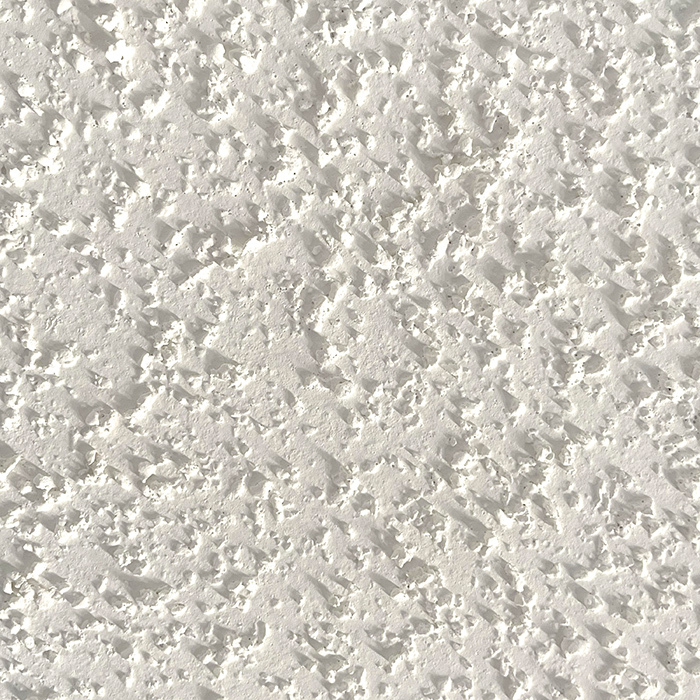
For American Decals wallpaper and murals, start with a smooth, sound, clean, dry, properly prepared ceiling. Do not apply them directly over popcorn, knockdown, orange peel, or another textured finish. Texture reduces contact with the surface and can show through the design. If the paint is peeling or there are signs of a leak, resolve the underlying problem first. If you are unsure about an existing finish, have a qualified professional assess it before planning the project.
Peel and stick or traditional wallpaper with paste?
Traditional unpasted wallpaper is our starting recommendation for a ceiling. An installer can use the adhesive specified for the material and adjust a strip while the paste is wet to line up the pattern. That working time matters overhead, especially with a detailed fern repeat or a mural where one branch continues across a seam.
We have also heard from an installer who preferred peel and stick. If that is your installer’s preference, ask: “Have you installed this particular material on a ceiling, and what preparation and adhesive method do you recommend for my surface?” Confirm the method with us before ordering or adding paste to a self-adhesive product. Our ceiling wallpaper installation guide covers preparation and installation planning in more detail.
Try the view before you commit
Order a sample in the material you are considering and have someone hold it flat against the ceiling while you look from the bed or doorway. Compare it with a second sample held vertically if you plan to paper the walls, too. Look at both in your own daylight and evening light. Use the samples to judge color and detail, and a room mockup to judge the full repeat or mural composition.
If you like the view, the next step is How to Choose Wallpaper for a Ceiling, where you can compare pattern scales and layouts. Or browse Ceiling Wallpaper to start with a design you love.